Areas of Natural Change in Coat Growth
Service Agreement and Information
Cowlicks, Crowns and Partings
Natural Cowlicks
Natural cowlicks are more likely to become visible when the coat is clipped to a shorter length, particularly at 10 mm or below. When the hair changes direction or grows in a different pattern, the underlying cowlick can become more noticeable and may sometimes appear as though the area has been shaved too closely or clipped unevenly.
However, cowlicks are a natural characteristic of the coat and are not the result of a grooming error. Their appearance and severity vary between individual dogs according to their natural coat growth and genetics. They may also be more pronounced on one side of the body than the other.
When the coat is left longer, the additional length can help to conceal or soften the appearance of natural cowlicks, partings and swirls.
Natural Changes in Coat Direction
A dog’s coat does not always grow in one consistent direction. In certain areas, the direction and density of the coat naturally change, which can create differences in how the coat lies and appears when clipped.
These changes are commonly found around the sides of the neck and behind the ears, across the fore-chest, underneath the tail, and along the rear of the forelegs from the outer elbow towards the pastern. In these areas, the change in growth direction can create a visible line or parting in the coat.
When the coat is left longer, these natural changes in growth direction are often concealed by the surrounding hair. When the coat is clipped short, particularly to a 7F (3.2 mm) length, the underlying growth pattern becomes much more apparent.
The coat may form natural swirls, rosettes or circular patterns in these areas, commonly known as cowlicks. The position, shape and prominence of these patterns vary naturally from dog to dog and can appear differently on each side of the body.
As a result, a short clip may reveal variations in the appearance or length of the coat that are a natural consequence of the individual dog’s coat growth, rather than an uneven or incorrect groom.
In essence, cowlicks are patches of fur that grow in opposing, clockwise or anticlockwise directions. These are not always easy to spot, so you might not become aware of them until the fur is trimmed away, exposing what might appear to be a bald spot.


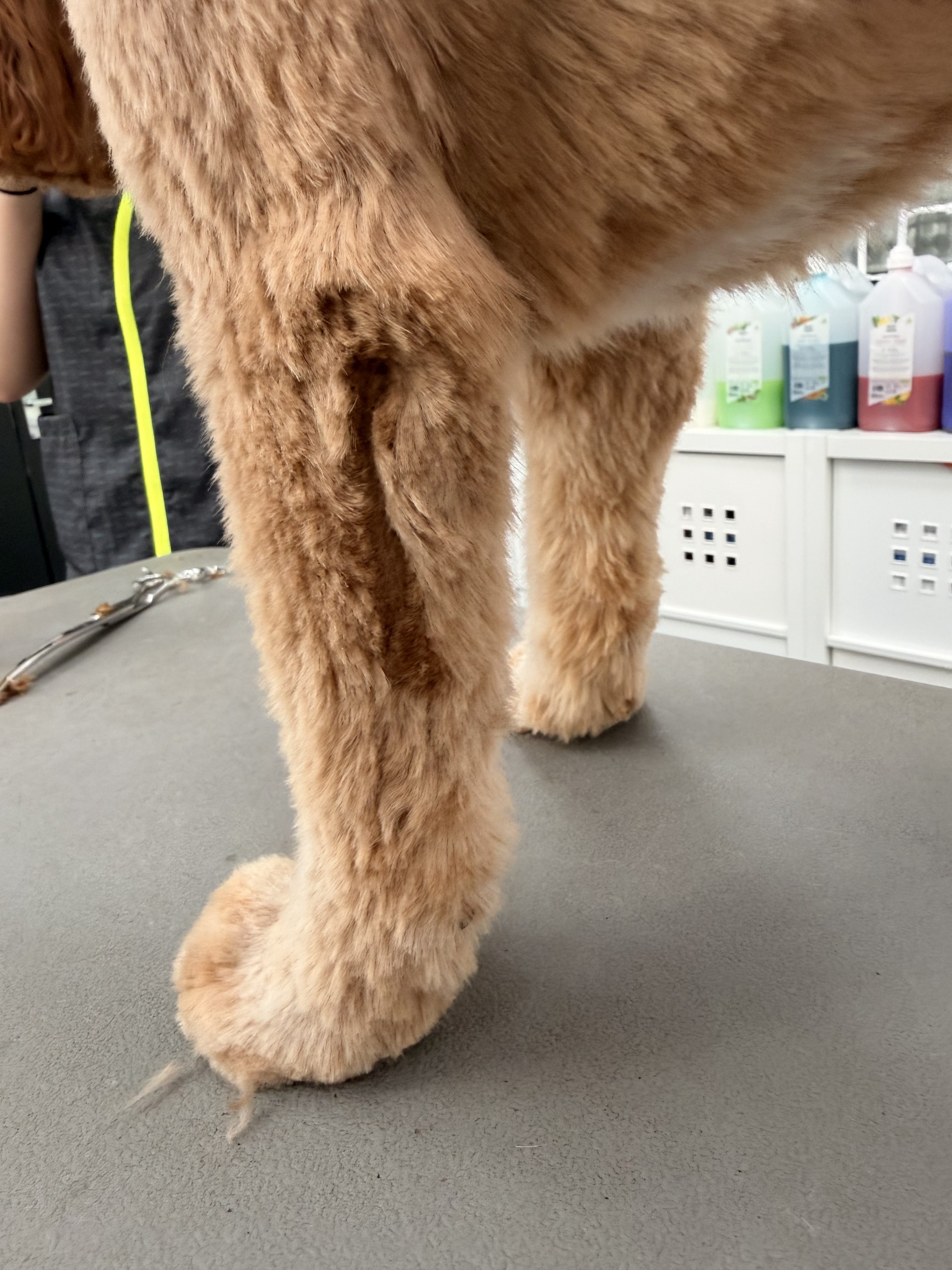
When the legs are trimmed short, either at the owner’s request or because the coat needs to be clipped due to matting, the natural parting of the coat may become visible. This is a normal result of removing the surrounding length and is not an indication of uneven grooming.
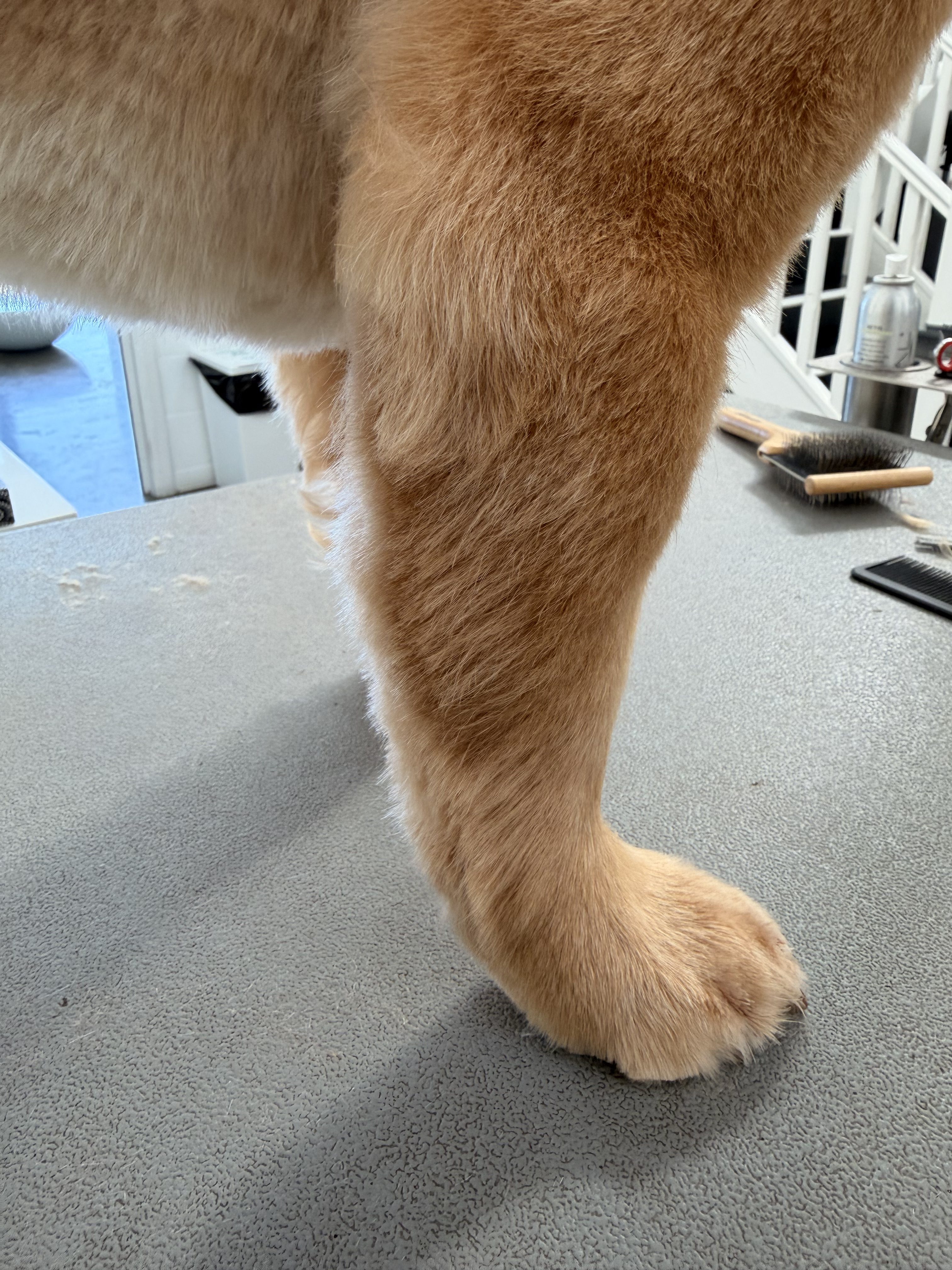
Conversely, when the coat is left longer, the additional length and volume can naturally fall over the parting, helping to conceal or soften its appearance. This can sometimes give the legs a more uniform appearance, even though the natural parting remains underneath the coat.